
Cart
0
Did you know?
Add a second treatment and save 10% on your whole order.
Every month, applied automatically. Your clinician reviews your chart, no extra visit.
Every month, applied automatically. Your clinician reviews your chart, no extra visit.

Semaglutide and tirzepatide changed weight care. Most people assume they only work as a shot. That's not the whole story.
GLP-1 medicines are peptides. Swallow a peptide and most of it gets broken down by stomach acid, digestive enzymes and your liver before it reaches your blood. That's why ordinary pills don't work well for them. The one swallowed GLP-1 pill on the market uses a special absorption enhancer and still needs a much bigger dose than a shot.
But your gut isn't the only way into your bloodstream.
The lining of your mouth is packed with small blood vessels. Medicine held under your tongue or against your cheek can absorb straight into your bloodstream, skipping stomach acid and the liver. It's called sublingual or buccal delivery, and it's used for things like nitroglycerin and some hormone and psychiatric medicines.
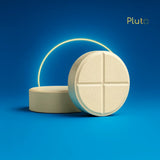
You let the tablet dissolve on your tongue for 30 to 60 seconds. The goal is for more of the dose to absorb through your mouth, so less of it has to survive your stomach. Whatever reaches your blood acts on the same receptors the shots do, which are involved in appetite, fullness and how fast your stomach empties.
Here's the honest part: there's far less research on dissolving-tablet semaglutide and tirzepatide than on the shots, and compounded versions haven't been studied the way brand-name drugs have. Results depend on the formulation, the dose and taking it the way you're told. That's why your clinician starts low, checks in on how you respond, and adjusts the dose or switches you if it isn't working.
A needle-free GLP-1 can make sense if you'd rather skip injections, travel a lot or want a simpler routine. Your clinician decides whether a GLP-1 fits you, which one and at what dose.
Compounded medications are prepared by a licensed U.S. pharmacy for an individual patient. They are not FDA-approved, and the FDA does not review them for safety, effectiveness or quality. A prescription is issued only if a licensed clinician decides it is right for you.
Not sure what fits you?
Answer a few questions and see a plan with real prices. A licensed Texas clinician reviews every plan.
Take the 2-minute quiz